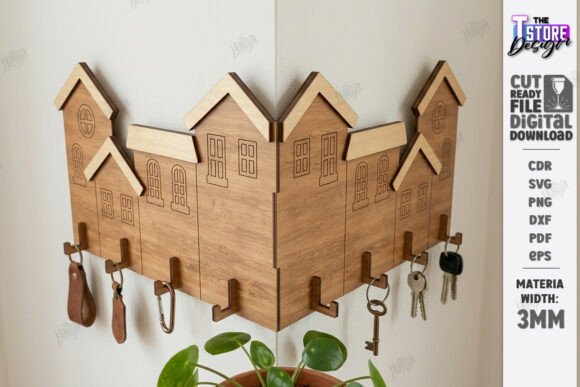
3D Wooden Corner Key Holder Laser Cut: A Designer's Review
When I first opened the files for 3D Wooden Corner Key Holder Laser Cut, my immediate reaction wasn't about the technical specifications or the file format. It was about the mood. There is something undeniably warm and inviting about a house silhouette that promises shelter, organization, and a touch of whimsy with its playful cats and mountain backdrop. As an experienced designer who has spent years turning digital vectors into tangible stitched products, I know that a design's success lies in how it translates from a screen to fabric. This piece isn't just a simple icon; it carries a narrative of "sweet home" that can elevate a standard entryway accessory into a heartfelt keepsake.
The visual personality of this design is distinct. The layered 3D effect implied by the name suggests depth, but when we are talking about machine embroidery, that depth must be achieved through clever stitch work rather than actual physical layering. The layout is naturally suited for wall decor, yet its potential extends far beyond the hallway. For those of us running small shops or selling on platforms like Etsy, understanding where a design fits is crucial. 3D Wooden Corner Key Holder Laser Cut feels right at home on rustic linen aprons, cozy nursery blankets, or even as a decorative accent on a canvas tote bag for a boutique owner.
Real-World Application: From Screen to Stitch
Let's imagine a real scenario. You are preparing for the holiday season and want to create a personalized gift line for local craft fairs. You decide to make custom embroidered patches for clients who love their pets and their homes. You pull up the vector file for the 3D Wooden Corner Key Holder Laser Cut design. The silhouette of the house is strong, but the details—the playful cats and the mountain peaks—require careful consideration during digitization.
If you were to apply this to a sweatshirt embroidery project, the result would be striking. The house shape offers a large enough area for fill stitches to create texture, while the smaller elements like the cat faces allow for satin stitch detailing that pops against a dark background. However, if you plan to use this on a baby item, such as a onesie or a receiving blanket, the scale changes. You might need to adjust the hoop size to ensure the entire scene fits comfortably without distorting the fabric. The key here is versatility. This design works beautifully as a standalone motif on a pillow cover, but it also serves as a perfect central element for a larger composition involving other home-themed icons.
I have seen designers struggle with designs that look great digitally but fall apart under the needle. With 3D Wooden Corner Key Holder Laser Cut, the challenge lies in maintaining the integrity of the "wooden" aesthetic through thread choice. Using variegated threads could mimic the grain of wood, adding a tactile quality that flat colors cannot achieve. Conversely, using solid, earthy tones would lean more into the modern farmhouse trend. The decision impacts the final product value significantly. A well-executed version of this design signals professionalism and attention to detail, which builds customer trust and encourages repeat business.
Navigating Technical Challenges
While the concept is charming, practical application requires caution. Not every fabric surface is suitable for this level of detail. If you attempt to stitch this onto thin, stretchy fabric like a lightweight t-shirt or a synthetic cap material without proper stabilization, the corners of the house may pucker, ruining the clean lines of the laser-cut style. The design features intricate corners and potentially tiny lettering or fine lines representing the roof shingles or tree branches. These areas are prone to thread breaks or loss of definition if the stitch density is too high.
For commercial embroidery projects, especially those intended for frequent washing, you must consider the durability of the finish. Dense stitch areas, particularly around the detailed cats, can become stiff and uncomfortable if not balanced correctly. When testing on textured fabrics like a heavy canvas tote bag, the raised nap of the fabric can obscure the finer details of the mountain range. In these cases, a lighter thread color or a contrasting stabilizer might be necessary to ensure the design remains visible and crisp.
Curved surfaces present another hurdle. While caps and hats are popular canvases for custom apparel, the curvature can distort the straight lines of the house silhouette. If you are working on a curved surface, you will likely need to re-digitize the design to account for the tension, or choose a flatter area of the garment, such as the front panel of a jacket or the cuff of a sleeve. Additionally, dark fabrics require a careful review of thread colors. Without a light underlay or specific thread selection, the subtle details of the layered house might get lost in the darkness.
Design Notes for the Creative Entrepreneur
Before you commit to producing a batch of finished products, there are several steps every designer should take to ensure success. First and foremost, test the design on scrap fabric. This is non-negotiable. Run the 3D Wooden Corner Key Holder Laser Cut file through your machine on a piece of the same material you intend to sell. Check the thread color contrast immediately. Does the thread pop against the fabric, or does it blend in too much? Adjust your thread palette accordingly before investing in bulk production.
Review the stitch density carefully. High-density designs can cause fabric puckering, especially on lightweight materials. Confirm the hoop size required for the full design to avoid cropping out essential elements like the playful cats. Inspect small details under magnification to ensure they are legible. Sometimes, what looks like a clear line in a digital mockup becomes a blob of thread once stitched. If the details are too fine, consider simplifying them or increasing the spacing between elements.
It is also wise to test the design in black and white mockups. This helps visualize the contrast and balance without the distraction of color. Compare how the design performs on both light and dark fabric backgrounds. Use the proper stabilizer for your chosen fabric type; a tear-away might not suffice for a heavy-duty tote bag, while a cut-away could be too rigid for a baby onesie. Finally, verify whether the design license allows for commercial use. Many digital product sellers assume they can resell any design they purchase, but licensing terms vary widely. Ensure you have the rights to sell the finished items or the digital files themselves.
Final Thoughts on Visual Appeal and Value
The ultimate goal of any embroidery project is to create something that resonates with the buyer. 3D Wooden Corner Key Holder Laser Cut taps into a deep emotional connection people have with their homes and pets. When executed well, it transforms a functional item like a key holder pattern into a sentimental piece of art. The visual appeal comes from the balance between the structured geometry of the house and the organic shapes of the nature elements.
For handmade product creators, this design offers a unique selling point. It is specific enough to stand out in a crowded market but broad enough to appeal to a wide audience of homeowners and pet lovers. Whether used for holiday gifts, wedding favors, or everyday boutique branding, the design adds a layer of sophistication and charm. By paying attention to the technical nuances of stitching and selecting the right materials, you can turn this vector file into a best-selling item that reflects your brand's commitment to quality.
In conclusion, this design is a powerful asset for any creative entrepreneur looking to expand their product line. It bridges the gap between digital precision and handmade warmth. With thoughtful preparation and a keen eye for detail, 3D Wooden Corner Key Holder Laser Cut can become a centerpiece in your collection of custom apparel, embroidered patches, and home decor items. Just remember to test, adapt, and always prioritize the wearer's experience over the sheer complexity of the design.